
Saree Types · Traditional
Traditional Indian Sarees by Region
Every state has its own loom, motif and story. Explore India’s most famous regional and handloom sarees — and learn what makes each one unique.
The Rich Heritage of Regional Sarees
India has more than a hundred distinct saree traditions. Each one reflects the climate, culture and craft of its region — from the golden brocades of Varanasi to the tie-dyed Bandhani of Gujarat and the fine muslin Jamdani of Bengal. These traditional sarees are woven by artisan families who have passed down their techniques for generations.
Choosing a handloom saree is a way to wear history and support skilled weavers at the same time. In this guide, Saree Design Hub introduces the most celebrated regional sarees, how to recognise them and how to style them for modern occasions.

Famous Traditional Sarees of India
A region-by-region look at the handloom and traditional sarees every saree lover should know.
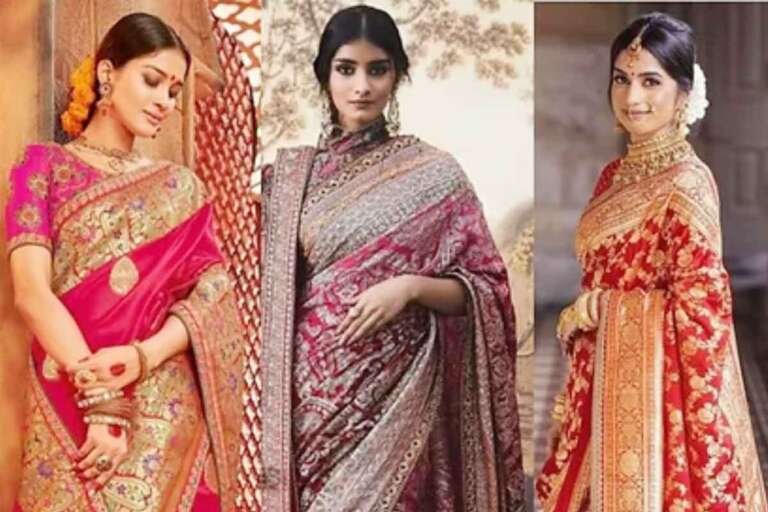
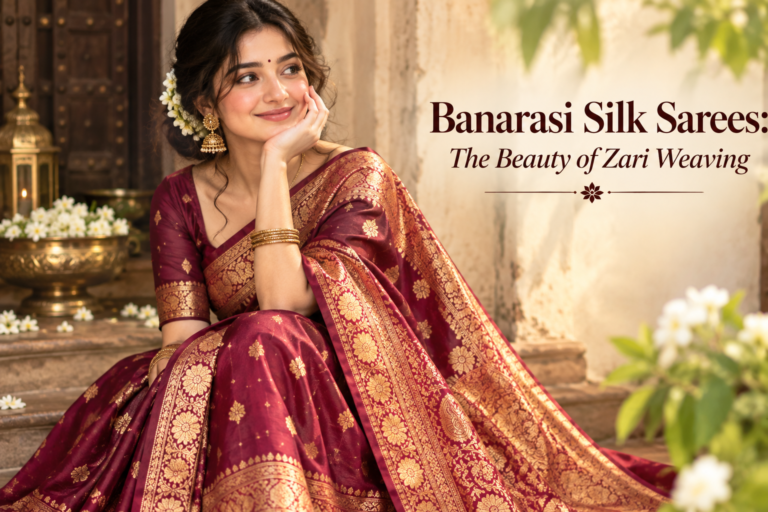
Banarasi Saree (Uttar Pradesh)
Luxurious silk with gold and silver zari brocade, Mughal floral motifs and heavy pallus. A symbol of North Indian bridal tradition.
Kanjivaram Saree (Tamil Nadu)
Heavy mulberry silk with contrast temple borders, checks and motifs of peacocks, parrots and temples. Known for durability and rich colour.
Bandhani Saree (Gujarat & Rajasthan)
Created by tying tiny knots before dyeing, Bandhani produces dotted patterns in vivid reds, yellows and greens. Popular for festivals and weddings.
Paithani Saree (Maharashtra)
Silk with peacock and lotus motifs on the pallu and colour-changing weaves. A treasured heirloom for Maharashtrian brides.
Chanderi Saree (Madhya Pradesh)
Sheer silk-cotton with fine zari buttis and a glossy finish. Light, elegant and perfect for summer festivities.
Jamdani Saree (West Bengal)
A muslin weave with motifs added by hand on the loom, giving the illusion of patterns floating on sheer fabric. A UNESCO-recognised craft.
Sambalpuri Saree (Odisha)
Known for its ikat technique, where yarn is tie-dyed before weaving to create shankha (conch), chakra and flower motifs.
Kasavu Saree (Kerala)
Off-white or cream cotton with a golden zari border, traditionally worn for Onam and Vishu. Minimal, graceful and iconic.
Pochampally Ikat (Telangana)
Geometric double and single ikat patterns in bold colours, woven in silk and cotton. A modern favourite for its striking designs.
How to Identify an Authentic Handloom Saree
- Look for the Handloom Mark or GI (Geographical Indication) tag on sarees like Banarasi, Kanjivaram, Paithani and Pochampally.
- Check for slight irregularities in weave and motifs — machine-made sarees look perfectly uniform.
- Examine the reverse side: handloom sarees often show floats and knots where threads change colour.
- Buy from trusted weavers, cooperatives or certified stores to ensure authenticity and fair pay for artisans.
Styling Traditional Sarees for Modern Occasions
Traditional sarees do not have to look old-fashioned. Pair a Kasavu or Chanderi saree with a contemporary sleeveless or high-neck blouse for office events. Wear a Bandhani or ikat saree with oxidised silver jewellery for a boho festive look. For weddings, let a Banarasi or Kanjivaram shine with temple or kundan jewellery and a classic bun with fresh flowers.
Traditional Draping Styles Across India
- Nivi drape: the most common style, with pleats at the front and the pallu over the left shoulder.
- Gujarati / Seedha pallu: the pallu is brought from the back over the right shoulder and spread across the front.
- Bengali drape: wide box pleats with the pallu brought around both shoulders, often with a key bunch tucked in.
- Nauvari (Maharashtrian): a nine-yard saree draped like trousers for ease of movement.
- Mundum Neriyathum (Kerala): a two-piece drape worn with Kasavu sarees.
Why Choose Handloom Sarees?
Handloom sarees are breathable, long-lasting and unique — no two pieces are exactly the same. By choosing handloom, you help preserve centuries-old weaving traditions and support artisan communities. A good handloom saree also ages beautifully, becoming softer and more personal with every wear.
Related Saree Guides
Dive deeper with our detailed guides from the Saree Design Hub blog.

Frequently Asked Questions
What are the most famous traditional sarees of India?
Some of the most famous traditional sarees are Banarasi, Kanjivaram, Paithani, Bandhani, Chanderi, Jamdani, Sambalpuri, Kasavu and Pochampally Ikat.
What is the difference between handloom and powerloom sarees?
Handloom sarees are woven manually by artisans and show small irregularities and unique character, while powerloom sarees are machine-made, perfectly uniform and usually more affordable.
Which traditional saree is best for summer?
Chanderi, Kasavu, Jamdani and handloom cotton sarees are lightweight and breathable, making them ideal for summer.
What is a GI-tagged saree?
A GI (Geographical Indication) tag certifies that a saree is made in its region of origin using traditional methods. Banarasi, Kanjivaram, Paithani, Chanderi and Pochampally sarees have GI tags.
How should I store traditional silk and handloom sarees?
Wrap them in soft muslin or cotton cloth, store in a cool and dry place, refold every few months and keep them away from direct sunlight, moisture and perfume.
Explore Every Saree Type
Continue your journey through silk, bridal, designer and lightweight fabric sarees with our complete guides.
