
Saree Types · Bridal
Bridal & Wedding Sarees for Every Ceremony
Red Banarasi for the pheras, pastel organza for the reception, festive silk for the mehndi — find the perfect wedding saree for the bride, family and guests.
Choosing Your Wedding Saree
A bridal saree is the most meaningful outfit many women will ever wear. It has to look stunning in photos, feel comfortable through hours of rituals and reflect family traditions — all at once. That is why choosing a wedding saree takes more thought than any other purchase.
Today’s brides mix the classic with the contemporary: traditional red and gold silks for the main ceremony, lighter designer drapes for the reception and colourful festive sarees for the haldi, mehndi and sangeet. This guide walks you through the most popular wedding saree styles, colours and fabrics so you can plan every look with confidence.
Popular Bridal & Wedding Saree Styles
From heirloom silks to modern reception drapes, these are the wedding sarees brides and guests love most.
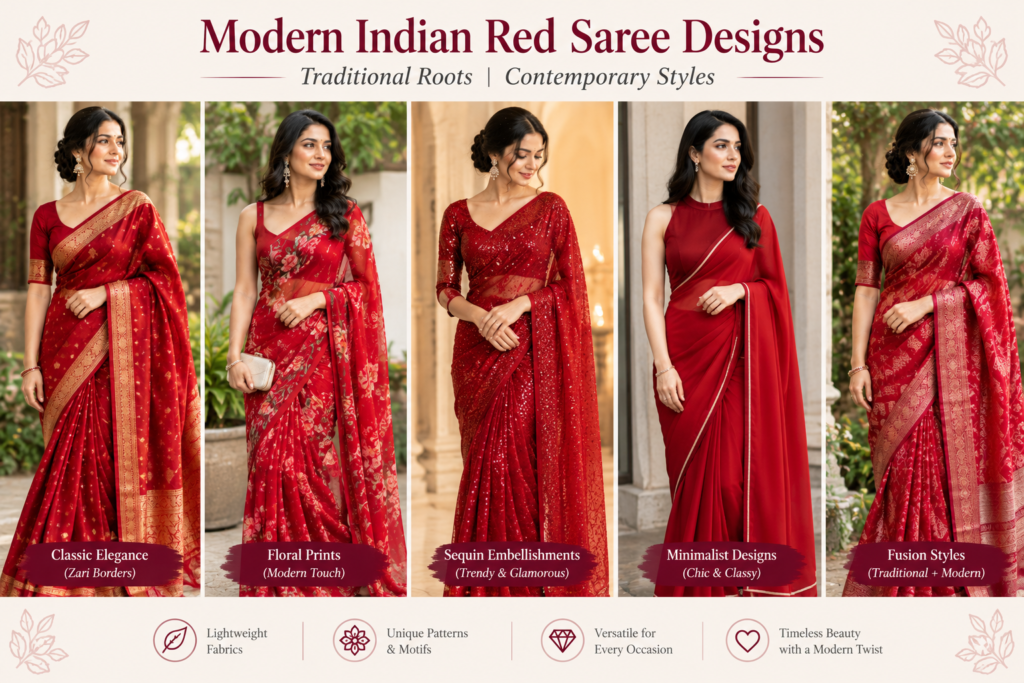
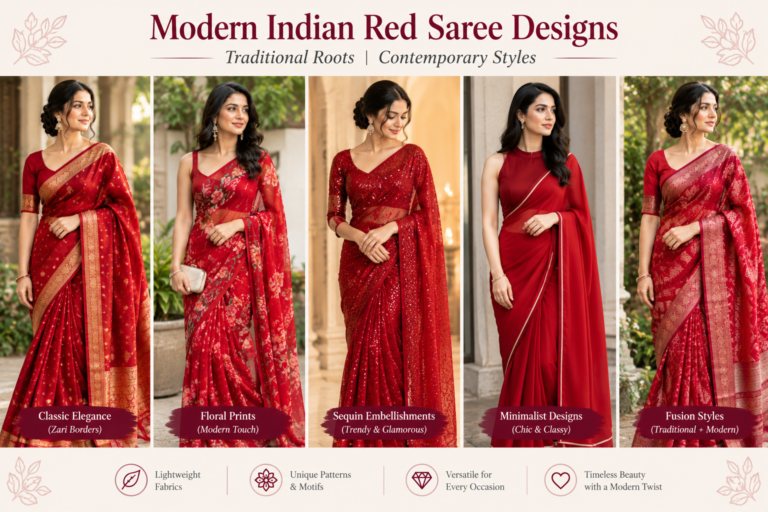
Red Bridal Saree
Red symbolises prosperity and new beginnings, which is why it remains the most iconic bridal colour. Deep red, maroon and vermilion silks with gold zari are timeless.
Banarasi Bridal Saree
Heavy brocade, intricate jaal patterns and a rich pallu make Banarasi sarees a top choice for North Indian weddings and nikah ceremonies.
Kanjivaram Wedding Saree
South Indian brides favour Kanjivaram silk with contrast temple borders in colours like red-green, magenta-gold and mustard-maroon.
Reception Saree
For the reception, many brides switch to a designer saree in organza, net or georgette with sequins, crystals or pearl work in pastels, champagne or ivory.
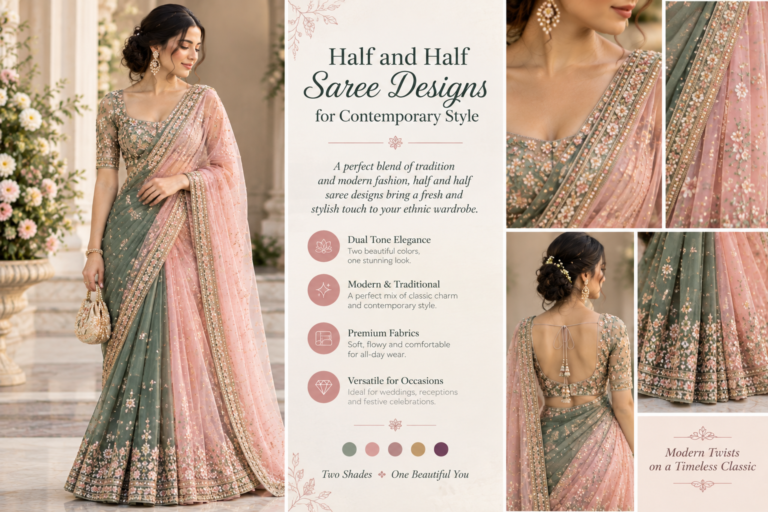
Lehenga-Style & Half Saree
A pre-stitched lehenga saree or a South Indian half saree gives you the grace of a saree with the ease and flare of a lehenga — ideal for sangeet nights.
Pastel & Ivory Bridal Sarees
Minimalist brides are choosing blush pink, mint, lilac and ivory sarees with delicate zardozi or threadwork for day weddings and modern ceremonies.
Mehndi & Haldi Sarees
Bright yellow, green and orange sarees in lightweight silk, georgette or cotton with gota patti work are perfect for fun, colourful pre-wedding functions.
Wedding Guest Sarees
Guests can choose soft silk, chiffon or embellished georgette sarees in jewel tones — elegant enough for the occasion without outshining the bride.
Bridesmaid Sarees
Coordinated sarees in the same colour family or fabric create beautiful group photos. Organza and satin sarees are trending choices for bridesmaids.
Best Colours for Wedding Sarees
Classic: red, maroon, crimson and gold remain the most traditional bridal colours across India and Pakistan.
Regal: emerald green, royal blue, wine and deep purple look luxurious, especially in silk with heavy zari.
Modern: blush pink, peach, mint, powder blue, champagne and ivory are popular for day weddings, engagements and receptions.
Tip: choose a colour that complements your skin undertone. Warm undertones glow in red, gold and orange, while cool undertones look stunning in wine, magenta, emerald and royal blue.
Blouse Designs That Complete the Bridal Look
- Elbow-length sleeves with zari borders for a traditional silk bridal saree.
- Boat neck or high neck blouses to show off a statement necklace or choker.
- Deep back with tassels (latkans) for a modern, photo-ready touch.
- Off-shoulder or corset blouses for reception sarees and cocktail looks.
- Embroidered contrast blouses to make a plain or pastel saree look richer.
Bridal Saree Styling Tips
- Do a full trial — saree, blouse, jewellery and dupatta — at least two weeks before the wedding.
- Ask for pre-pleated draping or a professional draper for heavy silk so the saree stays in place all day.
- Layer a net or silk dupatta over the head for ceremonies where a veil is customary.
- Balance heavy jewellery with a simpler saree, or let a richly woven saree shine with minimal jewellery.
- Wear comfortable footwear in a matching tone; you will be standing for hours.
How to Plan Sarees for Every Wedding Function
Plan each look as part of a story. Use lighter fabrics and brighter colours for daytime events like haldi and mehndi, a heavy traditional silk for the main ceremony, and a glamorous designer drape for the reception. Keeping one design element constant — such as gold zari, a signature colour or a family heirloom necklace — makes your wedding wardrobe feel cohesive in photos.
Related Saree Guides
Dive deeper with our detailed guides from the Saree Design Hub blog.

Frequently Asked Questions
Which saree is best for a bride?
Banarasi silk and Kanjivaram silk sarees are the most popular bridal choices because of their rich zari, heavy drape and traditional colours. For receptions, designer sarees in organza, net or georgette are trending.
What colour saree should a bride wear?
Red, maroon and gold are the most traditional bridal saree colours. Modern brides also choose emerald, wine, pastel pink, ivory or champagne depending on the ceremony and time of day.
What saree should I wear to a wedding as a guest?
Choose a soft silk, chiffon or embellished georgette saree in jewel tones or pastels. Avoid bridal red or heavy bridal designs so you do not overshadow the bride.
How much in advance should I buy my bridal saree?
Ideally buy your bridal saree three to four months before the wedding. This leaves time for blouse stitching, fall and pico work, trials and any alterations.
What is a lehenga saree?
A lehenga saree is a pre-pleated or pre-stitched saree that combines a flared lehenga skirt with a saree drape. It is easy to wear and popular for sangeet, engagement and reception functions.
Plan Every Wedding Look
Explore silk, designer, fabric and regional saree guides to complete your wedding wardrobe — for the bride, family and guests.
