


An Indian red saree is one of the most recognizable and timeless expressions of traditional fashion. Red has a deep connection with celebrations, cultural traditions, weddings, and festive occasions, making it a popular choice for saree designs across generations. From richly woven silk sarees to lightweight contemporary styles, the color red continues to inspire designers and fashion lovers.
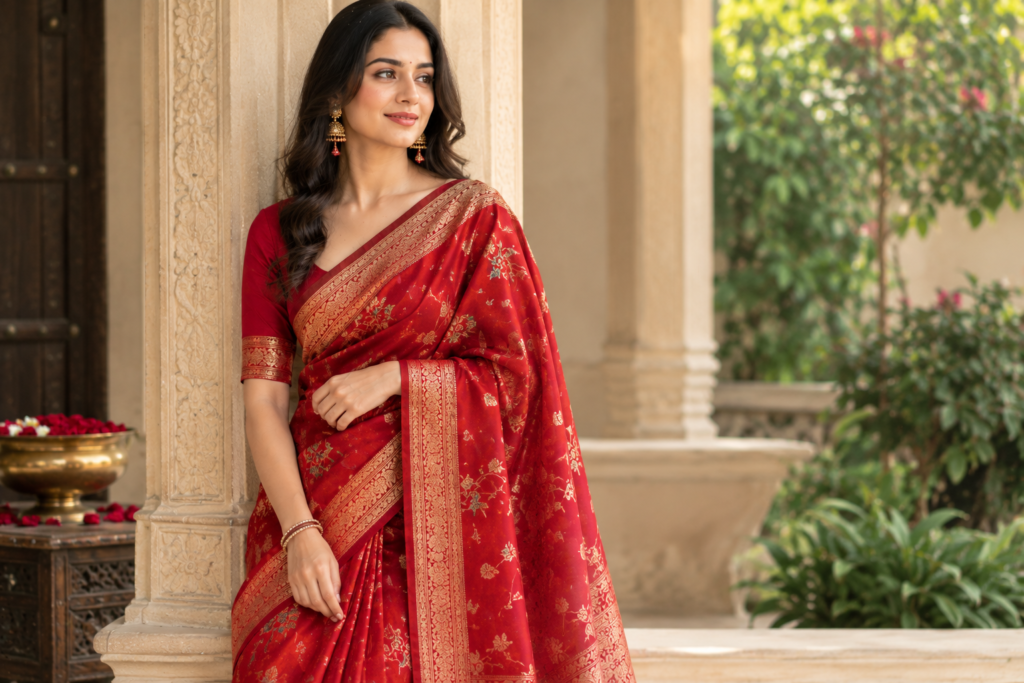
The beauty of an Indian red saree comes not only from its striking color but also from the wide variety of fabrics, patterns, borders, embroidery, and draping styles available. A traditional red saree can create a graceful and classic appearance, while a modern interpretation can introduce contemporary blouses, minimal details, or innovative draping.
At Saree Design Hub, we explore the timeless appeal of sarees and the ways traditional fashion continues to evolve. The Indian red saree represents this evolution beautifully, combining cultural heritage with changing fashion preferences.
Why the Indian Red Saree Is So Popular

Red has traditionally held an important place in Indian clothing. It is often associated with celebration, prosperity, warmth, and festive occasions. These associations have helped establish red as one of the most recognizable saree colors.
An Indian red saree can be simple or elaborate depending on its fabric and design. A plain red saree may focus on the beauty of its color and drape, while an embroidered or woven design can feature intricate decorative details.
The versatility of red also makes it suitable for different styles. Deep red shades can create a rich and traditional appearance, while brighter or softer reds can give the outfit a more contemporary character.
Traditional Indian Red Saree Designs
Traditional saree designs often reflect the artistic heritage of different regions. Indian red sarees can feature woven motifs, decorative borders, zari-inspired details, embroidery, and traditional patterns.
Silk sarees are particularly associated with festive and formal occasions. A red silk saree with a detailed border can create a luxurious appearance, while a simpler silk design can provide understated elegance.
Traditional craftsmanship can also be seen in the arrangement of motifs and borders. Floral patterns, paisley-inspired designs, geometric motifs, and heritage details can add character without taking away from the dominant red color.
Red Saree With Golden Border
A red saree with a golden border is a classic combination. The warm contrast between red and gold creates a festive appearance and works particularly well for celebrations.
The border can be narrow and subtle or wide and richly decorated. A simple golden edge can maintain a minimalist appearance, while a detailed border can make the saree more traditional and formal.
Indian Red Saree for Weddings
Red has a strong connection with Indian wedding fashion, making a red saree a popular choice for wedding celebrations. Depending on the event, the saree can range from a simple traditional design to an elaborately decorated bridal-style outfit.
For a formal wedding occasion, rich fabrics such as silk can provide depth and texture. Embroidery, woven motifs, and decorative borders can further enhance the design.
A red saree can also be styled with a contrasting blouse. Gold, green, pink, maroon, or neutral shades can complement red in different ways, depending on the overall design.
Red Silk Saree: A Timeless Choice
Silk and red create a particularly traditional combination. The texture of silk allows the color to appear rich while giving the saree an elegant drape.
A red silk saree can feature traditional motifs, a contrasting border, or subtle woven detailing. Because the fabric itself has a distinctive appearance, even a relatively simple design can look refined.
Silk sarees can be suitable for weddings, festivals, formal family celebrations, and cultural events. Their versatility allows them to be styled in both traditional and contemporary ways.
Modern Indian Red Saree Designs
Although the red saree has a strong traditional identity, modern designers continue to reinterpret it. Contemporary Indian red sarees may feature minimalist designs, artistic prints, unusual borders, lightweight fabrics, or modern blouse styles.
Some designs focus almost entirely on the red fabric, using a simple silhouette and minimal decoration. Others combine red with contrasting colors or metallic accents to create a more contemporary appearance.
Modern draping techniques can also change the overall look. A structured pallu, different pleat arrangement, or contemporary blouse can make a traditional red saree feel more current.
Indian Red Saree With Designer Blouse
The blouse can significantly influence the appearance of a red saree. A traditional blouse in the same fabric and color can create a coordinated look, while a contrasting blouse can introduce a modern element.
Gold embroidery can complement a red saree for a festive appearance. Green, pink, black, white, and metallic shades can also create attractive combinations.
Contemporary blouse designs may include structured sleeves, modern necklines, textured fabrics, or subtle embroidery. The design should complement the saree rather than compete with its color and pattern.
Floral Indian Red Saree Designs
Floral patterns can soften the strong appearance of red while adding artistic detail. Small floral motifs can create a delicate look, while larger floral designs can make the saree more expressive.
White, pink, gold, green, and cream floral details can create different visual effects against red. The arrangement of flowers also influences the appearance, with scattered prints creating a lighter effect and dense patterns creating a richer look.
Floral red sarees can work for festive gatherings, daytime celebrations, family events, and other occasions where a traditional but fresh appearance is desired.
Regional Influence on Red Sarees
India has a rich textile heritage, and red sarees can reflect the distinctive weaving and design traditions of different regions.
Regional sarees may vary in fabric, motifs, borders, and weaving techniques. Some focus on detailed silk work, while others are known for lighter fabrics and distinctive patterns.
This regional diversity means that the Indian red saree is not one single style. Instead, it represents a broad collection of designs influenced by local craftsmanship and cultural traditions.
Choosing the Right Fabric for an Indian Red Saree
The fabric can determine how the saree drapes and how formal it appears. Silk can provide a rich and traditional appearance, while cotton can offer a lighter and more relaxed style.
Georgette and chiffon are known for their flowing appearance and can be suitable for contemporary occasions. Crepe can provide a smooth texture and elegant fall, while organza can offer a more structured silhouette.
The best choice depends on the occasion and the desired appearance. A grand celebration may call for a richer fabric, while a daytime event may work better with something lightweight.
How to Style an Indian Red Saree
Styling a red saree is largely about creating balance. Since red is already a strong color, accessories can be selected according to the level of detail in the saree.
Traditional jewelry can complement heavily woven or embroidered sarees. Gold jewelry is a classic choice, while silver or contemporary accessories can create a more modern appearance.
The blouse should coordinate with either the saree’s main color or one of its secondary shades. A contrasting blouse can add interest, while a matching blouse can create a more unified appearance.
A classic drape can emphasize the traditional character of the saree, while contemporary draping can give it a modern silhouette.
Indian Red Saree for Festivals
Festivals provide an ideal setting for wearing red sarees. The color naturally complements the celebratory atmosphere, while traditional motifs and decorative borders can strengthen the cultural character of the outfit.
A lightweight red saree can be suitable for daytime festivities, while a silk or embellished design can work beautifully for evening celebrations.
Accessories can also be adjusted according to the occasion. Traditional earrings, bangles, and a simple necklace can create a graceful festive look without requiring excessive decoration.
Indian Red Saree for Contemporary Occasions
The red saree is not limited to traditional events. Modern styling has made it possible to wear red sarees for parties, formal gatherings, cultural events, and evening celebrations.
A minimalist red saree paired with a contemporary blouse can create a sophisticated outfit. Alternatively, an embellished saree with modern accessories can provide a more glamorous appearance.
This flexibility demonstrates why the saree continues to remain relevant despite changing fashion trends.
Final Thoughts
The Indian red saree represents the enduring beauty of traditional fashion while offering countless opportunities for modern interpretation. Its rich color, cultural significance, and variety of fabrics and designs make it one of the most versatile saree styles.
From red silk sarees and golden borders to floral patterns and contemporary designer blouses, each variation offers a different expression of elegance. The right fabric, styling, accessories, and draping technique can transform the same color into completely different looks.
At Saree Design Hub, we believe that the beauty of the saree lies in its ability to connect heritage with personal style. The Indian red saree continues to achieve this balance, making it a timeless choice for celebrations, weddings, festivals, and modern occasions.

