


There is something timeless about a saree, but a designer saree brings a fresh and modern touch to this traditional outfit. From elegant fabrics and creative prints to contemporary drapes and detailed embroidery, today’s sarees combine traditional craftsmanship with modern fashion. Whether you are looking for a saree for a wedding, festive celebration, office event, party, or everyday wear, modern designer saree styles offer plenty of options to match your personal style.
At Saree Design Hub, we explore how saree fashion continues to evolve while keeping its traditional beauty alive. This guide covers what makes a saree a designer piece, the latest modern saree trends, trendy saree styles for different occasions, ready-to-wear sarees, and practical tips for choosing the right design.
What Is a Designer Saree?
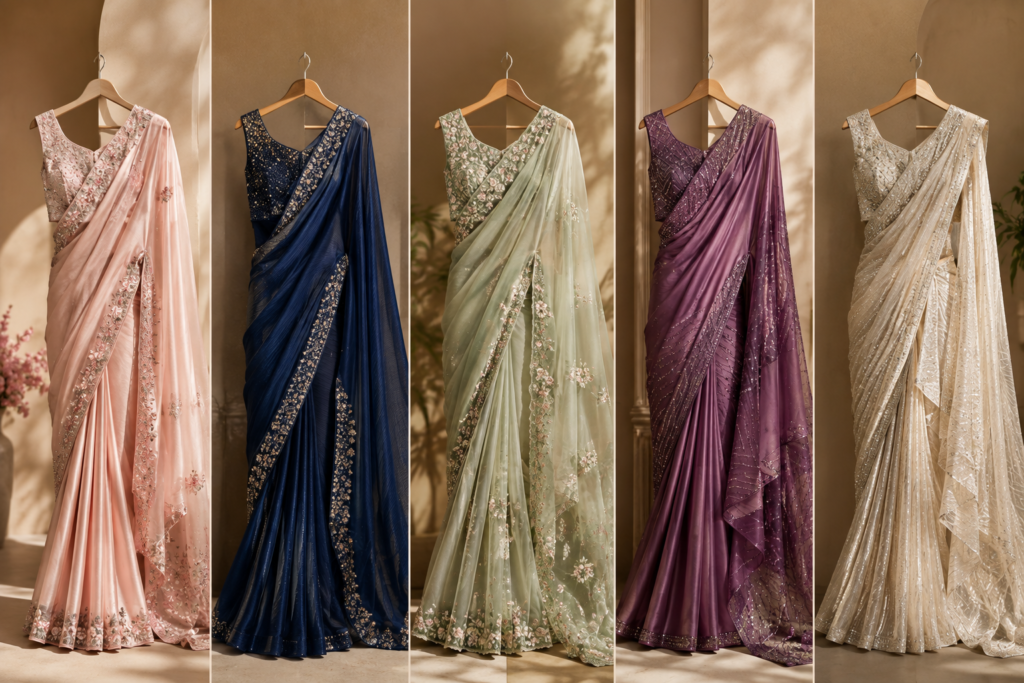
A designer saree is more than an expensive saree or a garment carrying a famous label. It is a saree created with a clear design concept, where the fabric, colours, embroidery, prints, borders, pallu, and blouse are carefully considered as part of the overall look.
Unlike many mass-produced sarees with repeated patterns, designer sarees often focus on originality, creative detailing, quality finishing, and distinctive styling. Hand embroidery, artistic prints, unique motifs, modern colour combinations, sustainable fabrics, and specially designed blouses can all contribute to a designer look.
When people search for designer saree designs, they are often looking for something that feels distinctive while still maintaining the elegance of traditional Indian fashion.
Traditional Weaves With a Modern Designer Touch

Traditional sarees such as Banarasi, Kanjivaram, Chanderi, and Bandhani have strong cultural and regional identities. Modern designers are giving these classic textiles a contemporary interpretation instead of replacing their traditional character.
For example, a Banarasi saree can be styled in soft pastel shades, while a traditional Kanjivaram-inspired border can be combined with a more contemporary fabric or blouse. This combination of heritage craftsmanship and modern styling helps traditional sarees appeal to today’s fashion-conscious wearers.
Modern Saree Designs and Current Fashion Trends
Modern saree designs have increasingly moved toward clean silhouettes, creative details, and statement-making simplicity. Instead of relying only on heavy embellishment, contemporary sarees can create an elegant look through colour, fabric, draping, and carefully placed details.
Popular modern design elements include:
- Minimal sarees with statement borders
- Ombre and gradient colour effects
- Geometric and abstract prints
- Contemporary blouse designs
- Minimal embroidery
- Modern metallic detailing
- Colour-blocked borders and pallus
- Lightweight and flowy fabrics
These design choices make a saree suitable for both traditional occasions and contemporary fashion settings.
Fabrics That Define Modern Saree Fashion
Fabric plays an important role in the appearance and comfort of a saree. Organza, tissue silk, linen blends, satin, georgette, and chiffon have become popular choices for contemporary saree styles because they offer different textures and draping effects.
Lightweight fabrics can create an effortless appearance, while silk and other structured fabrics can provide a more traditional and luxurious look. Choosing the right fabric depends on the occasion, weather, desired drape, and level of comfort.
Colour Trends for Designer Sarees
Colour is one of the easiest ways to give a saree a modern appearance. Soft pastels remain popular for elegant daytime looks, while deeper shades such as emerald, wine, mustard, and other rich tones can create a stronger statement.
Colour blocking is another effective trend. Combining contrasting shades on the border, pallu, or blouse can give even a simple saree a contemporary appearance without requiring heavy embellishment.
Trendy Sarees for Every Occasion
A saree is no longer limited to weddings and major festivals. Trendy sarees can be styled for office wear, casual outings, festive gatherings, parties, and semi-formal events.
Sarees for Office Wear
For professional settings, lightweight cotton, linen, and other comfortable fabrics can create a polished appearance. Pairing a simple saree with a structured blouse and minimal accessories keeps the outfit elegant without appearing overly formal.
Sarees for Festivals
Festive occasions provide more freedom to experiment with colour and embellishment. Sarees featuring metallic threadwork, subtle sequins, attractive borders, or traditional motifs can add festive appeal without creating a heavily bridal look.
Sarees for Casual Outings
Printed georgette, chiffon, and lightweight sarees can work well for casual gatherings and daytime events. A simple blouse and minimal accessories can create an effortless and comfortable outfit.
Styling Tips for a Modern Saree Look
The way a saree is draped can completely change its appearance. The traditional Nivi drape creates a classic look, while contemporary draping styles can give the outfit a more fashion-forward feel.
Modern styling options can include:
- Pant-style saree drapes
- Dhoti-style drapes
- Contemporary pleating
- Crop-top blouses
- Jacket-style blouses
- Belted saree looks
- Minimal statement jewellery
Accessories should complement rather than compete with the saree. A statement earring can work beautifully with a minimal saree, while a saree with a detailed print or heavy border may look better with simpler jewellery.
Designer Ready-to-Wear Saree: A Convenient Fashion Choice
A designer ready-to-wear saree offers the beauty of a saree with the convenience of a pre-stitched or pre-draped design. The pleats are generally prepared in advance, making the saree easier to wear without spending time arranging every fold.
This style can be particularly convenient for people who are new to wearing sarees or those who want a quicker dressing option for events, travel, and busy occasions.
Modern ready-to-wear designs can still include quality fabrics, embroidery, stylish borders, and contemporary blouse designs. The main difference is the construction, which is designed to make wearing the saree easier.
How to Choose a Ready-to-Wear Saree
Ready-to-wear sarees can differ in construction and flexibility. Some designs are made as a connected garment, while others feature pre-stitched pleats with a pallu that can still be adjusted.
Before choosing one, consider:
- How easily it fits around the waist
- Whether the pleats are adjustable
- How the pallu sits
- The fabric and drape
- The occasion for which you plan to wear it
- The comfort and movement it provides
Trying the style before purchasing can help you understand how the particular construction fits and moves.
Saree Designers and the Indian Fashion Industry
India has a rich saree-design tradition supported by weavers, printers, embroiderers, zari workers, and other skilled artisans. Today, saree designers across cities such as Jaipur, Kolkata, Mumbai, and Delhi are combining traditional techniques with contemporary fashion.
Some designers work with regional textiles and traditional motifs, while others experiment with modern cuts, prints, fabrics, and silhouettes. This diversity has helped the saree remain relevant to new generations while preserving important elements of traditional craftsmanship.
Supporting responsibly produced sarees can also help sustain the artisans and communities involved in the creation of these garments.
How to Choose the Right Designer Saree
Choosing the right designer saree depends on more than its appearance. Consider the occasion, fabric, comfort, colour, blouse design, and overall styling before making a decision.
1. Consider the Occasion
A lightweight printed saree may work well for a casual gathering, while silk, embroidery, or detailed designs can be more suitable for weddings and festive celebrations.
2. Choose the Right Fabric
Fabric affects both the appearance and comfort of a saree. Lightweight materials can be easier to manage, while structured fabrics may create a more traditional and luxurious drape.
3. Think About the Colour
Choose colours that suit the occasion and coordinate well with the blouse and accessories. Pastels can create a soft, elegant appearance, while rich colours can make a stronger statement.
4. Pay Attention to the Blouse
The blouse should be considered part of the complete saree design. A well-designed blouse can transform a simple saree into a polished and contemporary outfit.
5. Prioritise Comfort
A beautiful saree should also be comfortable enough for the amount of time you expect to wear it. Consider the fabric weight, drape, fit, and ease of movement before choosing a design.
Final Thoughts
The saree continues to evolve without losing the cultural beauty that makes it special. From traditional handloom-inspired designs to minimal modern styles and convenient ready-to-wear options, there is now a wide variety of designer saree styles for different occasions and personal preferences.
Whether you prefer an embroidered traditional look, a minimalist modern saree, a bold contemporary design, or a ready-to-wear style, today’s saree fashion makes it easier to combine heritage with individuality. At Saree Design Hub, the goal is to explore these changing styles while celebrating the craftsmanship and creativity that keep the saree timeless.

